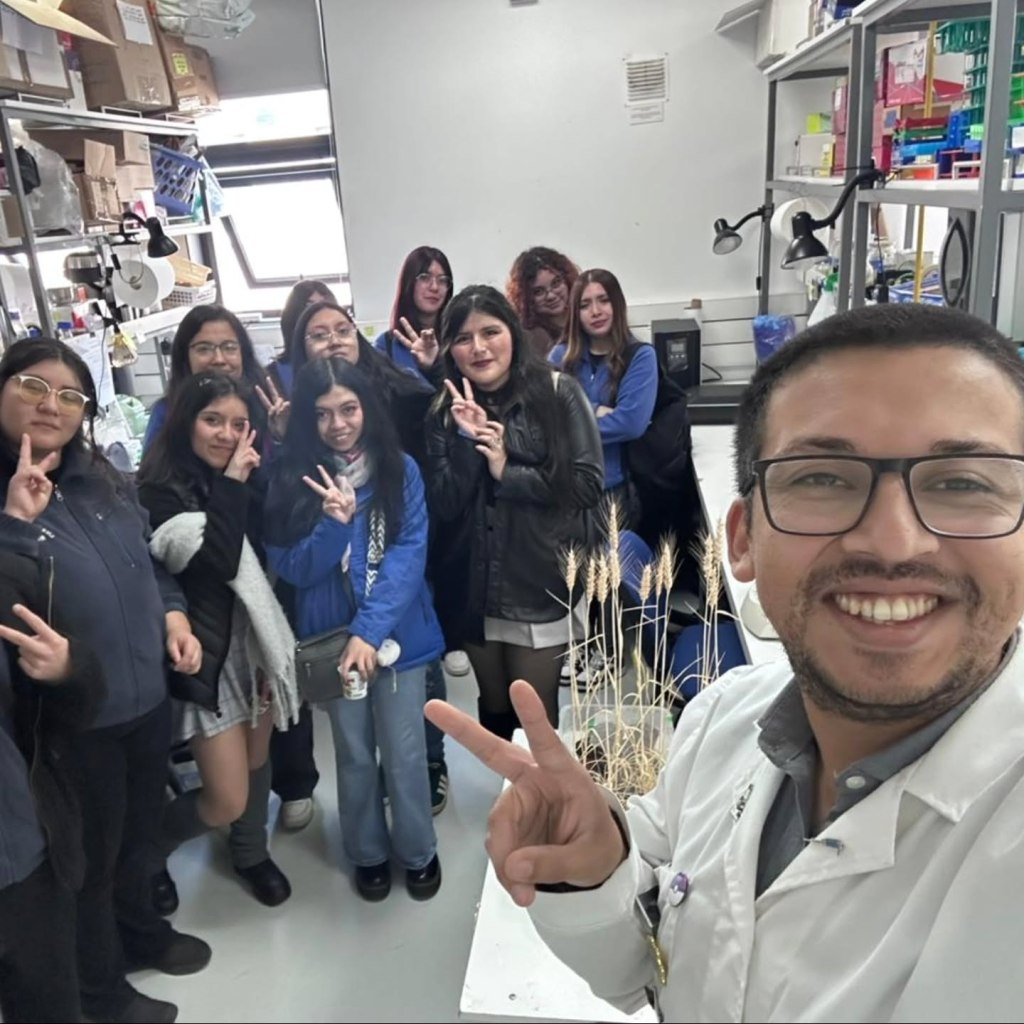
This week we opened our lab doors at UACh to welcome students from Liceo Bicentenario R.A.A.C. in La Unión. Ángelo Riquelme, biochemist and research assistant in our lab, showed them how we study the ways plants adapt to nutritional and abiotic stresses such as heat. 🌱🧬
Esta semana abrimos las puertas de nuestro laboratorio en la UACh para recibir a estudiantes del Liceo Bicentenario R.A.A.C. de La Unión. Ángelo Riquelme, bioquímico y asistente de investigación del lab, les mostró cómo estudiamos la forma en que las plantas se adaptan a estreses nutricionales y abióticos, como el calor. 🌱🧬
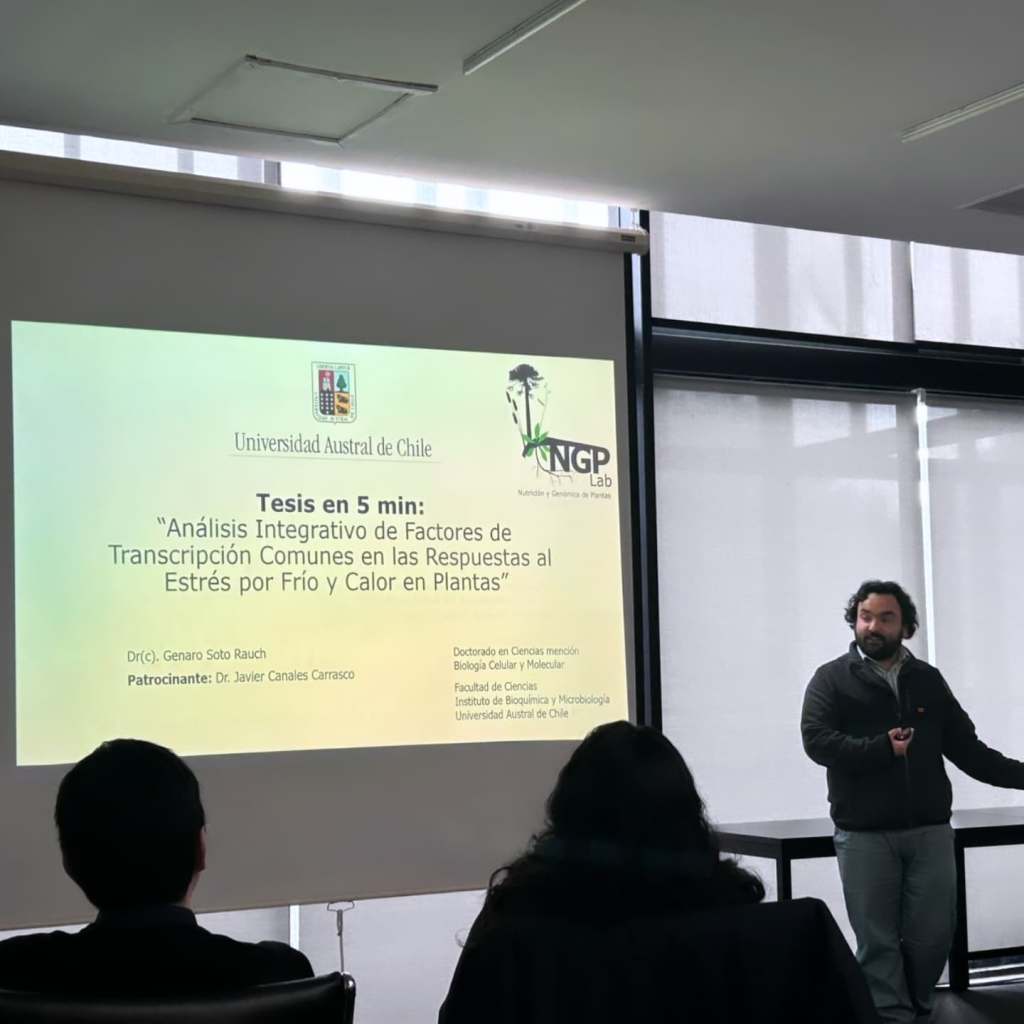
Congratulations to our labmate Genaro Soto, PhD candidate, on his successful “5-minute thesis” presentation. His work, “Integrative analysis of transcription factors shared by cold and heat stress responses in plants”, is one of the research lines we are pursuing in the lab and will be published soon. This short, accessible format is a great way to share our research with a wider audience. 🚀
Felicitamos a nuestro compañero Genaro Soto, candidato a Doctor, por su exitosa presentación de tesis doctoral en formato «5 minutos». Su trabajo, «Análisis integrativo de factores de transcripción comunes en las respuestas al estrés por frío y calor en plantas», es una de las líneas de investigación que desarrollamos en el laboratorio y pronto será publicado. Este formato breve y cercano es una excelente forma de acercar nuestra investigación a más personas. 🚀
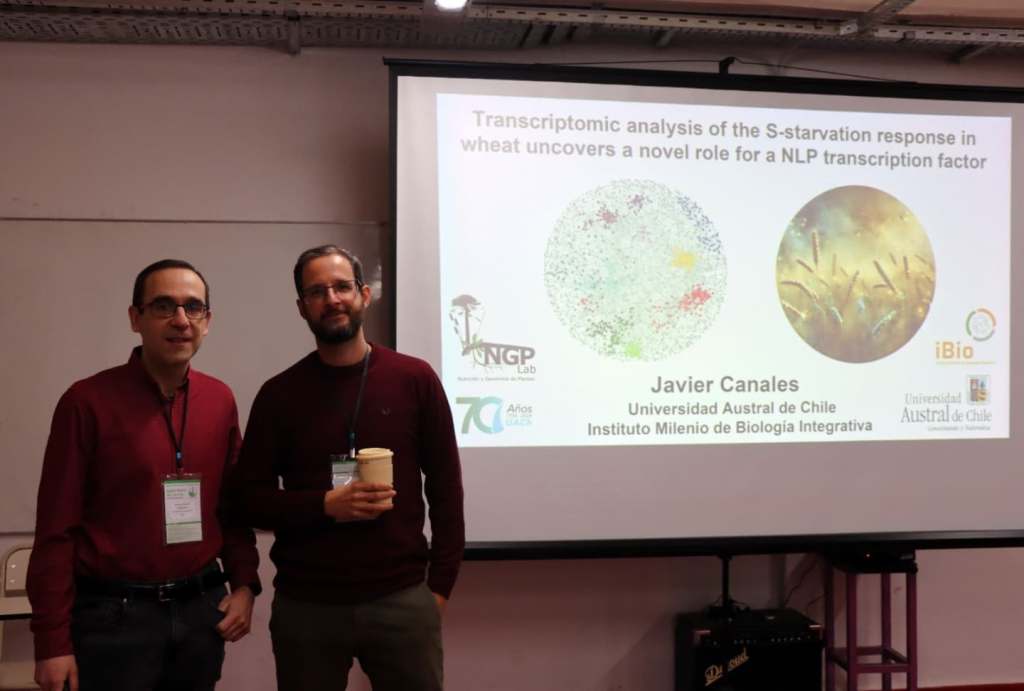
A few weeks ago, Dr. Javier Canales was an invited speaker at the Mineral Nutrition Symposium of the Argentine Society of Plant Physiology Congress in Mar del Plata, Argentina. In his talk, “Transcriptomic analysis of the S-starvation response in wheat uncovers a novel role for a NLP transcription factor”, he shared our latest progress on the molecular factors that modulate the wheat response to sulfur deficiency. 🧬🌾
Hace unas semanas el Dr. Javier Canales participó como invitado en el Simposio de Nutrición Mineral del Congreso de la Sociedad Argentina de Fisiología Vegetal, realizado en Mar del Plata, Argentina. En su charla, «Transcriptomic analysis of the S-starvation response in wheat uncovers a novel role for a NLP transcription factor», compartió los avances de nuestra investigación sobre los factores moleculares que modulan la respuesta del trigo a la deficiencia de azufre. 🧬🌾
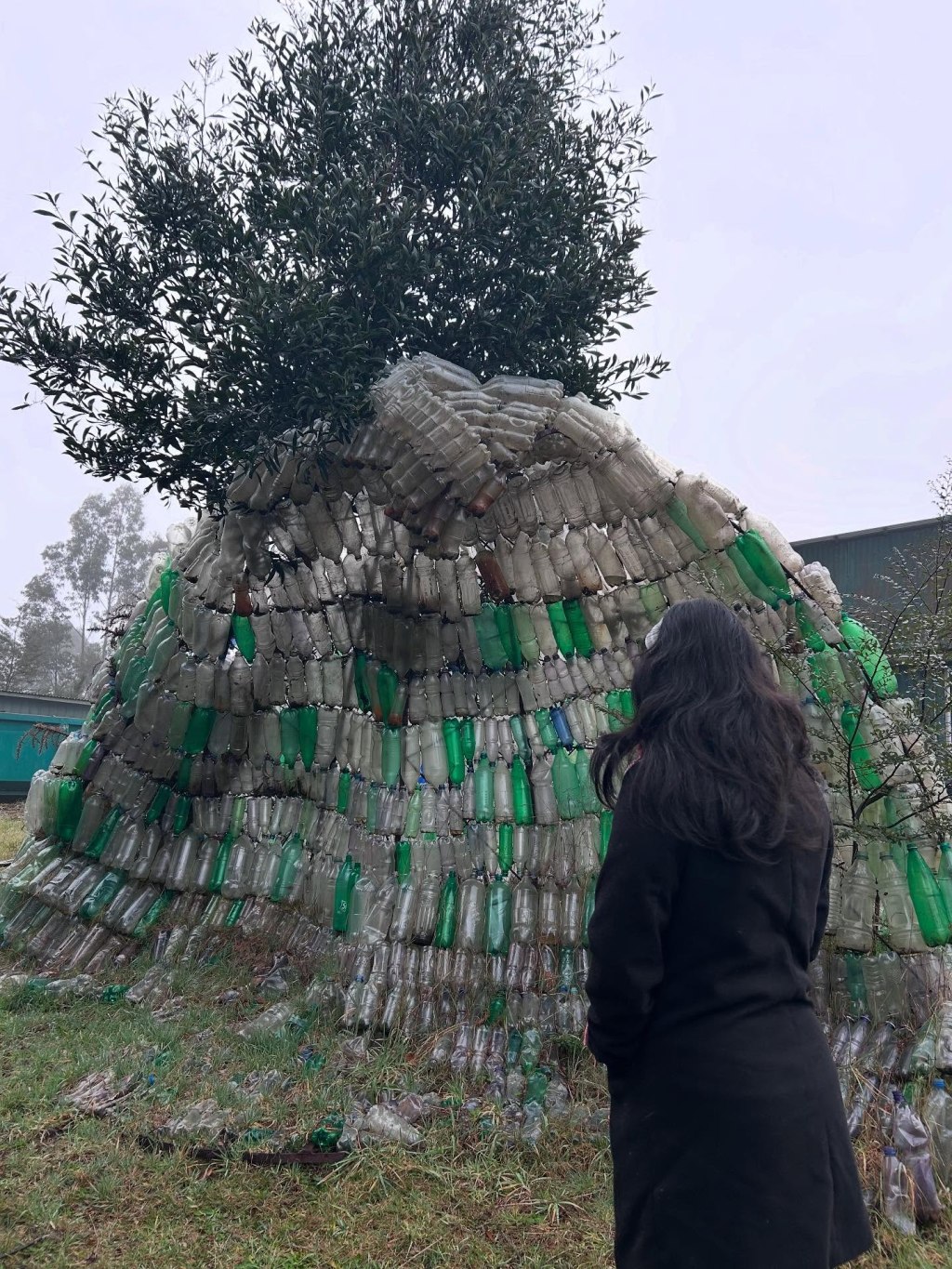
Today we took a guided tour of UACh’s waste management facilities. Many thanks to the UACh Environmental Management team for showing us around. It’s great that these opportunities are open to every lab that wants to learn more about recycling and the safe handling of the hazardous waste generated across the university. ♻️
Hoy realizamos una visita guiada por las instalaciones de manejo de residuos de la UACh. Muchas gracias al equipo de Gestión Ambiental UACh por el recorrido. Es muy valioso que estas instancias estén abiertas a todos los laboratorios que quieran aprender más sobre reciclaje y sobre el manejo de las sustancias peligrosas que desechamos como universidad. ♻️
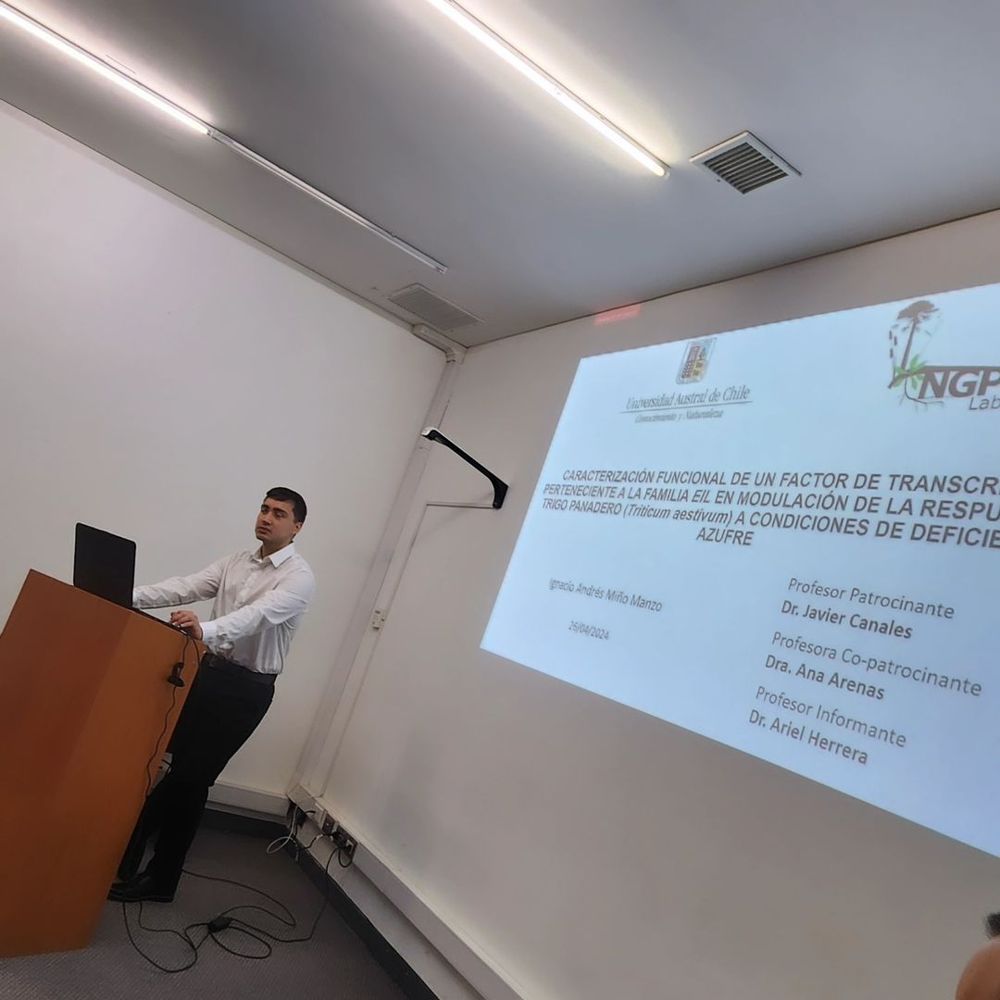
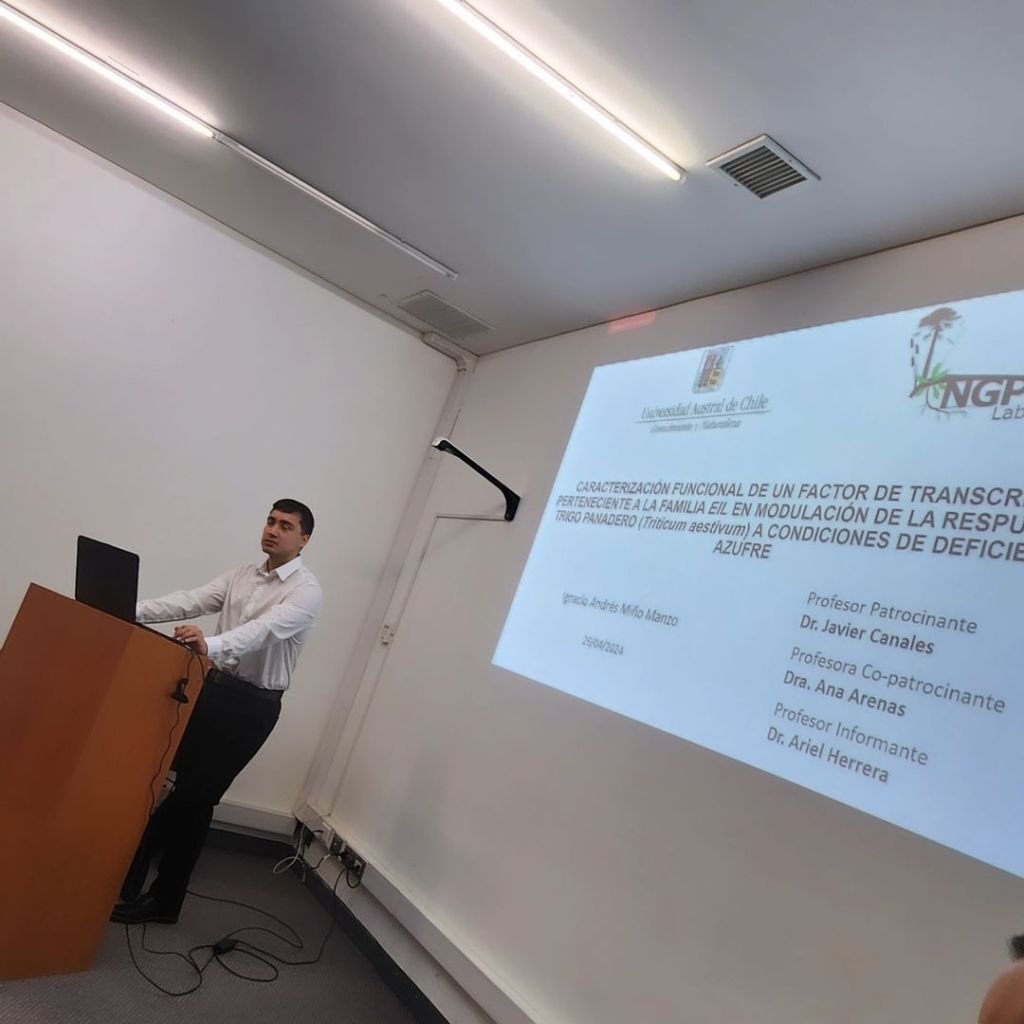
Con mucha alegría anunciamos la exitosa defensa de tesis de Ignacio Andrés Miño Manzo, quien completó recientemente sus estudios de pregrado en Bioquímica en la Universidad Austral de Chile. Su tesis, titulada «Caracterización funcional de un factor de transcripción de la familia EIL en la modulación de la respuesta del trigo harinero (Triticum aestivum) a condiciones de deficiencia de azufre», abordó el papel clave del azufre en el crecimiento y desarrollo de las plantas, e investigó la función de un factor de transcripción específico, TaSLIM1-5D, en la regulación de la respuesta del trigo a la deficiencia de azufre.
Azufre: un nutriente crítico frente a desafíos globales
El azufre es un macronutriente esencial para las plantas y cumple un papel fundamental en la síntesis de compuestos como aminoácidos, proteínas y vitaminas. Sin embargo, los suelos agrícolas de todo el mundo muestran una preocupante disminución en sus niveles de azufre, lo que afecta el rendimiento y la calidad nutricional de los cultivos. La investigación de Ignacio se centró en comprender los mecanismos mediante los cuales las plantas se adaptan a la deficiencia de azufre, con especial énfasis en el papel de TaSLIM1-5D en el trigo harinero.
TaSLIM1-5D: un posible regulador maestro
A partir de estudios previos en la planta modelo Arabidopsis thaliana, Ignacio investigó la función de TaSLIM1-5D, un factor de transcripción de la familia EIL, en trigo harinero. Mediante secuenciación de RNA y análisis de expresión génica, aportó evidencia sólida de que TaSLIM1-5D actúa como un regulador central de la respuesta del trigo a la deficiencia de azufre. Además, identificó varios posibles genes blanco de TaSLIM1-5D relacionados con el metabolismo del azufre, lo que refuerza su papel clave en este proceso.
Generación de plantas transgénicas: un paso hacia el futuro
Como parte de su tesis, Ignacio generó con éxito plantas transgénicas de Arabidopsis que sobreexpresan TaSLIM1-5D. Estas plantas serán una herramienta valiosa para futuras investigaciones, que permitirán comprender en mayor profundidad cómo TaSLIM1-5D influye en el metabolismo del azufre y en la adaptación de las plantas a su deficiencia.
La investigación de Ignacio tiene implicancias importantes para mejorar las prácticas agrícolas y enfrentar el desafío global de la deficiencia de azufre en los cultivos. Al desentrañar las complejas rutas moleculares que intervienen en la adaptación de las plantas a condiciones de bajo azufre, podemos desarrollar estrategias para aumentar el rendimiento de los cultivos y contribuir a la seguridad alimentaria. ¡Felicitamos de corazón a Ignacio por este gran logro y le deseamos todo el éxito en sus próximos desafíos!
We are thrilled to announce the successful thesis defense of Ignacio Andrés Miño Manzo, who recently completed his undergraduate studies in Biochemistry at Universidad Austral de Chile. His thesis, titled «Functional Characterization of a Transcription Factor Belonging to the EIL Family in Modulating the Response of Bread Wheat (Triticum aestivum) to Sulfur Deficiency Conditions,» delved into the crucial role of sulfur in plant growth and development, and investigated the function of a specific transcription factor, TaSLIM1-5D, in regulating wheat’s response to sulfur deficiency.
Sulfur: A Critical Nutrient Facing Global Challenges
Sulfur is an essential macronutrient for plants, playing a vital role in the synthesis of crucial compounds like amino acids, proteins, and vitamins. However, agricultural soils worldwide are experiencing a concerning decline in sulfur levels, leading to compromised crop yields and nutritional quality. Ignacio’s research focused on understanding the intricate mechanisms by which plants adapt to sulfur deficiency, with a particular emphasis on the role of TaSLIM1-5D in bread wheat.
TaSLIM1-5D: A Potential Master Regulator
Drawing on previous studies in the model plant Arabidopsis thaliana, Ignacio investigated the function of TaSLIM1-5D, a transcription factor belonging to the EIL family, in bread wheat. Through RNA sequencing and gene expression analyses, he provided compelling evidence suggesting that TaSLIM1-5D acts as a central regulator of wheat’s response to sulfur deficiency. His research identified several potential target genes of TaSLIM1-5D involved in sulfur metabolism, further supporting its crucial role in this process.
Generating Transgenic Plants: A Step Towards the Future
As part of his thesis work, Ignacio successfully generated transgenic Arabidopsis plants that overexpress TaSLIM1-5D. These plants will serve as a valuable tool for future research, allowing for a deeper understanding of the specific mechanisms by which TaSLIM1-5D influences sulfur metabolism and plant adaptation to sulfur deficiency.
Ignacio’s research has significant implications for improving agricultural practices and addressing the global challenge of sulfur deficiency in crops. By unraveling the complex molecular pathways involved in plant adaptation to low sulfur conditions, we can develop strategies to enhance crop yields and ensure food security for the future. We extend our heartfelt congratulations to Ignacio on his outstanding achievement and wish him all the best in his future endeavors!